Harper Long · 20 October 2026
Coastal Road Upgrades Bring Dedicated Bike Lanes to Palmcrest
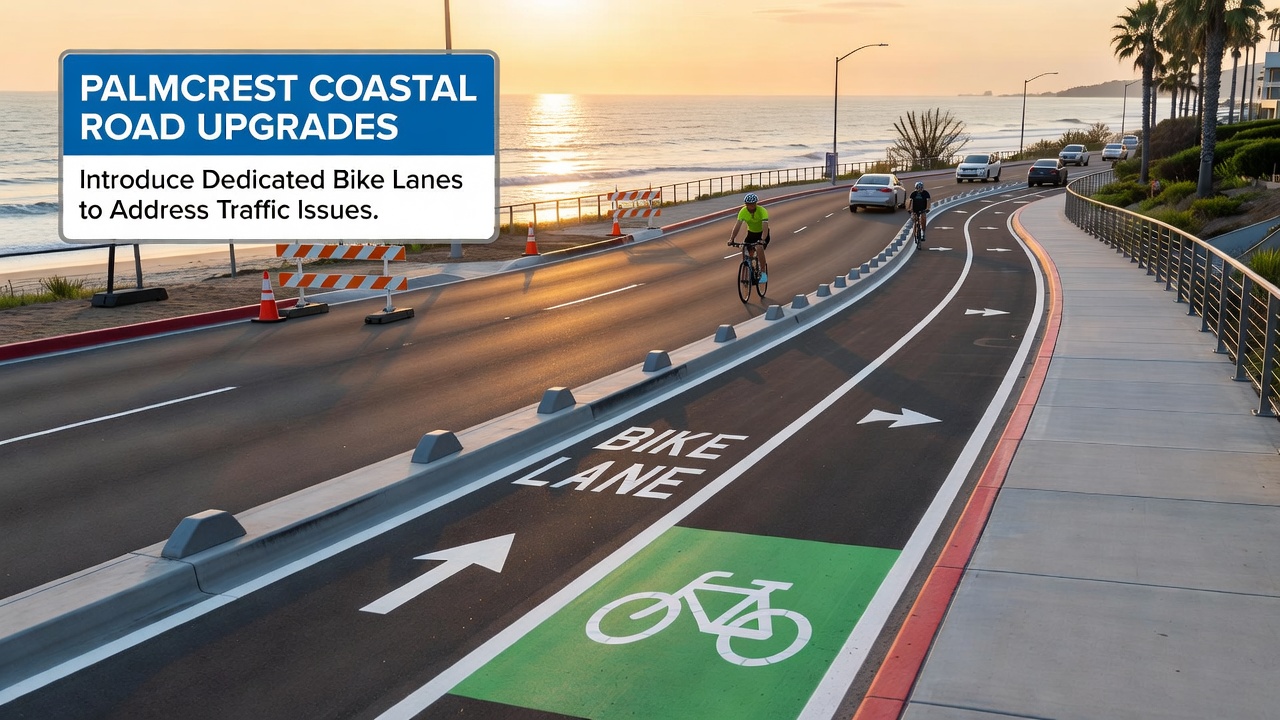
Coastal Road upgrades in Palmcrest have introduced dedicated bike lanes along key waterfront stretches, and these changes address persistent traffic congestion while improving safety for all road users, according to project documentation from the Palmcrest Department of Public Works. Construction crews began work in early 2025 on segments of Coastal Road and adjacent connectors, where daily vehicle counts often exceed 25,000 during peak summer months. The initiative adds protected lanes separated by curbs and bollards, plus new intersections with bike-specific signals.
Traffic studies conducted by regional planners showed that vehicle delays averaged 18 minutes during morning rush hours before upgrades started, and similar patterns appeared in afternoon commute data collected over three consecutive years. Planners incorporated findings from comparable projects in coastal communities, where separated bike infrastructure correlated with measurable drops in single-occupancy vehicle trips on parallel routes.
Project Scope and Timeline
The upgrades cover approximately 4.2 miles of Coastal Road between Harbor Point and Seaview Boulevard, with work progressing in phases to minimize disruptions. Phase one, completed by March 2026, installed bike lanes on the southbound side and widened sidewalks for pedestrian access. Phase two, scheduled for final paving and signage in October 2026, will complete the northbound lanes and connect them to existing paths near Palmcrest Beach Park. Crews coordinate with utility companies to relocate storm drains and fiber optic lines beneath the new lane markings, while temporary detours route vehicles through inland streets during overnight closures.
Local businesses along the corridor received advance notice of construction windows, and several reported stable foot traffic as visitors adapted to the altered layout. Data from the Palmcrest Chamber of Commerce indicates that delivery vehicles now use designated loading zones created as part of the redesign, reducing double-parking incidents that previously contributed to bottlenecks.
Design Features and Safety Measures
Engineers selected a buffer zone of at least four feet between bike lanes and vehicle travel lanes, following guidelines outlined in the Federal Highway Administration's Separated Bike Lane Planning and Design Guide. The design includes raised pavement markings at conflict points such as driveways and cross streets, along with green paint highlighting the bike paths through intersections. Lighting upgrades along the route use LED fixtures timed to extend visibility during early morning and evening hours when cyclist volumes increase.
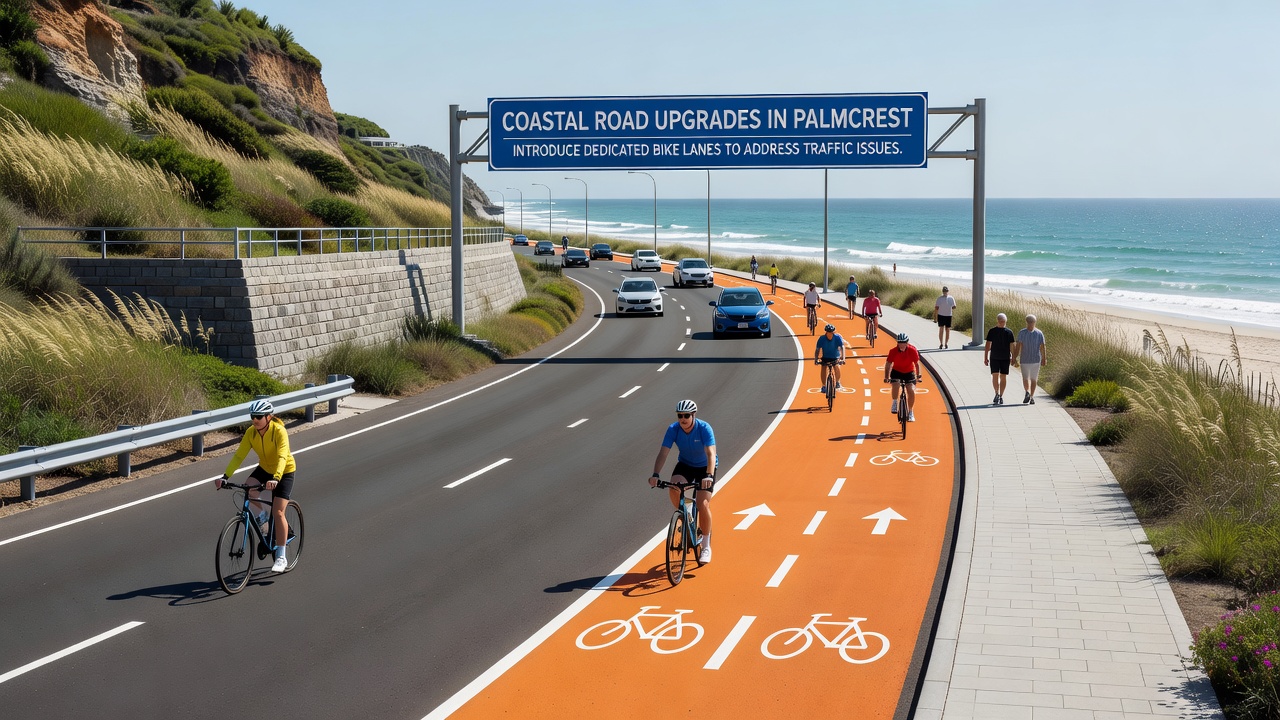
Observers note that similar buffered lanes in other coastal municipalities reduced cyclist-vehicle collisions by 32 percent within the first 18 months after installation, according to a 2024 report from Transport Canada on active transportation corridors. Palmcrest officials incorporated crash data from those case studies when finalizing intersection geometry and signal timing.
Traffic Impact Data and Monitoring
Automatic traffic counters installed before construction provide baseline measurements, and ongoing collection shows a 14 percent reduction in average vehicle speeds along the upgraded sections during the first month of partial operation. At the same time, bicycle counts rose from an average of 320 weekday trips to 485, based on sensors embedded in the new pavement. City analysts track these figures through a public dashboard updated monthly, allowing residents to review trends in real time.
Emergency response times remain a priority during construction, and fire department logs indicate no measurable increase in response intervals after crews implemented dedicated access lanes for first responders. The Palmcrest Police Department added bike patrol units along the corridor in September 2025, citing improved visibility and quicker navigation through previously congested areas.
Community Integration and Future Connections
Public meetings held throughout 2024 gathered input on lane placement and parking adjustments, resulting in the preservation of 92 percent of existing on-street parking spaces near retail clusters. The final design connects the new bike lanes to teh Palmcrest Trail network at two points, creating a continuous route for commuters traveling between residential neighborhoods and the downtown core. School districts serving the area have begun exploring bike-to-school programs that could utilize the infrastructure once fully operational.
Funding for the project combines local bond measures with state transportation grants, and total expenditures are projected to reach $18.7 million by completion. Project managers maintain records of material sourcing, with 68 percent of aggregate and asphalt supplied by regional quarries to reduce transport emissions associated with construction.
Conclusion
Coastal Road upgrades continue to evolve as Palmcrest integrates dedicated bike lanes into its transportation network, and monitoring efforts will extend through 2027 to evaluate long-term effects on traffic patterns and mode share. The October 2026 milestone marks the transition from active construction to full public use, after which maintenance crews will assume responsibility for lane upkeep and seasonal adjustments. Data collected during this period will inform decisions on potential extensions to neighboring corridors where similar congestion challenges exist.